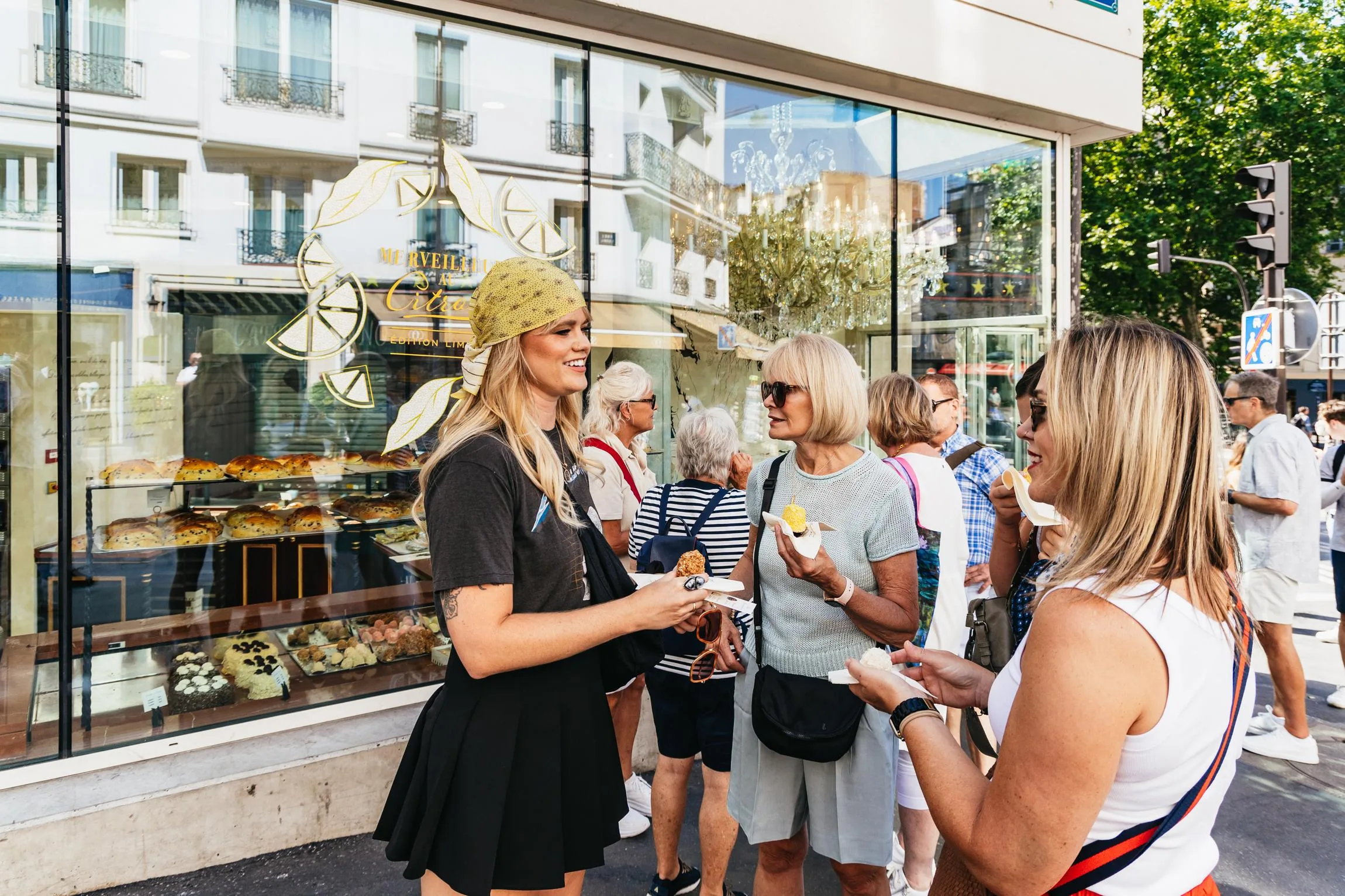
Why France Is Where Food Travel Was Invented
The Country That Wrote the Menu — and Still Sets the Table
France didn't just contribute to food culture — it built the vocabulary everyone else borrows. The restaurant is a Parisian invention; the "gastronomic meal of the French" is inscribed by UNESCO as intangible cultural heritage; and the country produces so many cheeses that no two authorities agree on the count, only that it runs comfortably past a thousand. Lyon serves offal-rich bistro cooking in its bouchons and is routinely argued to be the nation's true food capital; Bordeaux and Burgundy anchor the world's most studied wine map; Champagne is both a place and a legal boundary; and in Arcachon Bay, oyster farmers will shuck your dozen at a plastic table ten metres from the water it grew in.
The pleasure — and the problem — is that none of it is in one place. The croissant lesson is in a Paris fournil at dawn; the grand-cru cellar is a TGV ride east; the chocolate story starts in Bayonne, where cacao first crossed into France in the 1600s; the cognac barrels sleep two hours north of Bordeaux. French food travel is really a set of pilgrimages, and each one rewards a different kind of traveler: the one who wants to make something, the one who wants to taste something, and the one who just wants to walk and eat.
This guide exists to help you choose. Below, nine categories of French culinary experience — grouped into tours, hands-on classes, and tastings — each with its own comparison of the best cities to book it in. We don't sell anything on this page. We point you to the right category and city, and let you book on the page that fits your trip.
Choose Your French Food Experience
Nine Ways to Taste France
Grouped into guided tours, hands-on classes, and tastings. Each category page compares the best cities to book it in.
Tours
Market Walks & Guided Tasting Crawls
Eat your way through Lyon's bouchon quarter, the market halls of Paris, or Marseille's Vieux-Port with a local guide. The broadest way into a city — markets, history, and six-plus tastings on foot.
From Bayonne to the Grands Chocolatiers
Chocolate entered France through Bayonne in the 1600s and Paris perfected the salon du chocolat. Guided chocolatier crawls and hands-on workshops where you temper and mould your own bars.
Classes
Cook a French Meal From Scratch
Hands-on classes in Paris, Lyon, and Provence — proper sauces, market-to-table menus, a soufflé that actually rises. Usually 3–4 hours, always ending at the table with wine. The recipes go home with you.
Croissants, Macarons & the Morning Bake
Laminate real croissant dough, pipe macaron shells that don't crack, or bake baguettes in a working fournil. Short, hands-on, and you leave with a box of what you made.
Tastings
Bordeaux, Burgundy & the Great Names
Day-trip into Saint-Émilion's limestone cellars from Bordeaux, walk Burgundy's grand-cru villages from Beaune, or taste Châteauneuf-du-Pape where the galets hold the heat. Cellar tastings and long lunches included.
Chalk Cellars & Grower Houses
Reims and Épernay sit on millions of aging bottles in Roman-era chalk tunnels. Tour a grand maison, then taste at a family grower two villages over — or do the whole region as a day trip from Paris.
Comté, Époisses & a Thousand More
A guided board of France's greats with a fromager — raw-milk AOP classics, the seasons of Comté, and the wines that actually pair (more whites than you think). Paris and Lyon lead the counters.
Arcachon Bay, at the Farm Gate
Eat oysters metres from the water they grew in — farm visits on Arcachon Bay with the grower shucking, plus marble-counter tastings in Bordeaux and Paris. Cold white wine mandatory.
Barrel Cellars & the Angels' Share
The grand maisons and family stills of Cognac town — double distillation, decades in oak, and a VS-to-XO lineup that finally makes the labels make sense. Day trips run from Bordeaux.
Where to Book
France's Six Great Food Destinations
Each links to its strongest culinary experience — start here if you already know your destination. Going somewhere else? Browse all twenty-six destinations →
Every Region, One City
The capital curates all of France — market streets, fromageries, grand chocolatiers, and more pastry per block than anywhere on earth. Start with a guided market walk.
Paris Food Tour →The Bouchon Capital
France's working food capital — checked tablecloths, quenelles, praline brioche, and Les Halles Paul Bocuse as the city's pantry. Best eaten with a local ordering.
Lyon Food Tour →The Wine Capital
Grand châteaux, the Cité du Vin, and Saint-Émilion's limestone village an hour away — plus canelés and Arcachon oysters when the glass is empty.
Bordeaux Wine Tour →Champagne's Chalk Cathedral
Coronation city of French kings, sitting on kilometres of crayères where the grand houses age millions of bottles. Forty-five minutes from Paris by TGV.
Champagne Tour Reims →The Mediterranean Exception
Socca off the griddle, the Cours Saleya market, and a cuisine that looks to Liguria as much as Lyon — olive oil country in a butter nation.
Nice Food Tour →Alsace on a Plate
Half-French, half-German, entirely its own — choucroute, kougelhopf, winstubs, and the aromatic whites of the Alsace wine road on the doorstep.
Strasbourg Food Tour →Food Tour vs Cooking Class
Which Is Right for You?
Book a food tour if you want to taste widely and walk a real neighborhood — the market hall, the fromagerie, the bakery that locals queue at, with someone who knows which counter is worth the wait. It's the better first day in a new city, and the better fit for travelers who'd rather eat than cook. In Paris a chocolate crawl plays the same role with a sweeter itinerary.
Book a cooking class if you want to take something home — the technique, the recipe, the muscle memory of a proper beurre blanc. It's hands-on, usually 3–4 hours, almost always with wine, and it ends in a meal you made. If your ambitions are specifically flaky and golden, make it a pastry class — croissant lamination and macaron shells are skills you keep forever.
Still deciding among the tastings? A wine tour is a slow, scenic day in cellar country; a champagne tour adds the drama of the chalk crayères; a cheese tasting is the shortest, densest lesson in French food culture you can buy; and an oyster farm visit or cognac cellar tour turns a single product into the whole afternoon.
How to Choose
Three Questions to Find Your Experience
Do you want to cook, taste, or explore?
Hands-on → cooking or pastry class. Taste with a sense of place → wine, champagne, cheese, oysters, or cognac. Eat and walk → food tour or chocolate tour.
Which city are you in?
Each category page compares the best cities. Paris has the deepest supply in every category; Lyon owns the bouchon; Bordeaux and Beaune own the cellars; Reims owns the bubbles; Arcachon owns the oysters.
When are you going?
Paris pastry classes and champagne cellar tours sell out 1–2 weeks ahead in peak season. Remember the French clock — lunch at 12:30 sharp, dinner from 7:30 — and that many family producers close on Sundays and in parts of August.
French Food Experiences — FAQ
What travelers ask before booking a food experience in France.
It depends what you're after. Lyon is the working food capital — bouchons, quenelles, Les Halles Paul Bocuse; Paris has the deepest supply of everything from pastry classes to grand chocolatiers; Bordeaux pairs wine châteaux with canelés and Arcachon oysters; Reims and Épernay own champagne; Nice cooks the Mediterranean; Strasbourg eats like Alsace. Our city pages compare the top-rated experience in each.
No — the experiences we compare are run in English (many are bilingual). Guides handle the ordering and market conversations, and cooking or pastry classes are taught in English with recipes to take home.
Guided food tours typically run $70–$130 per person including tastings; hands-on cooking and pastry classes $60–$180; full-day wine or champagne region tours with transport and cellar tastings $100–$250. Each city page lists current prices.
They're different days out. A champagne tour centers on the cellars — Roman-era chalk tunnels under Reims and Épernay, a grand maison or a family grower, and vintage tastings; it also works as a day trip from Paris. A wine tour in Bordeaux, Burgundy or the Loire is more landscape and château. If bubbles are the goal, book Champagne; if terroir talk over long lunches, book a wine region.
Usually yes with advance notice — flag dietary needs at booking. French food culture leans on cheese, butter and charcuterie, so tours adapt stops rather than menus; cooking classes are generally the most flexible option.
A few days to a week is enough most of the year. In peak season (May–September) and around Christmas markets in Alsace, popular Paris classes and champagne cellar tours fill 1–2 weeks ahead. Most tours have free cancellation, so booking early is low-risk.
Paris for breadth — every region's produce, the world's best pastry scene, and endless choice of classes and tastings. Lyon for depth — the bouchon tradition, a compact old town built around eating, and less tourist markup. If you can, do both: they're two hours apart by TGV.
On a stricter clock than most visitors expect: lunch starts at 12:00–12:30 and kitchens genuinely close by 2pm; dinner runs from about 7:30pm. Food tours work with this rhythm — morning market tours end in lunch, and evening tastings start around 6–7pm. Outside those windows, a boulangerie is your friend.
You can eat them year-round — the old 'r-month' rule is about summer spawning texture, not safety. They're at their firmest and briniest from autumn through spring, and an Arcachon Bay farm tasting in cooler months is the connoisseur's pick.
Cooking classes, pastry workshops and chocolate-making are very family-friendly; most have low or no minimum age and kids love the hands-on parts. Wine, champagne and cognac tastings skew adult — check each tour's listing for age limits.
Still have questions? Email us at info@francefoodtours.com